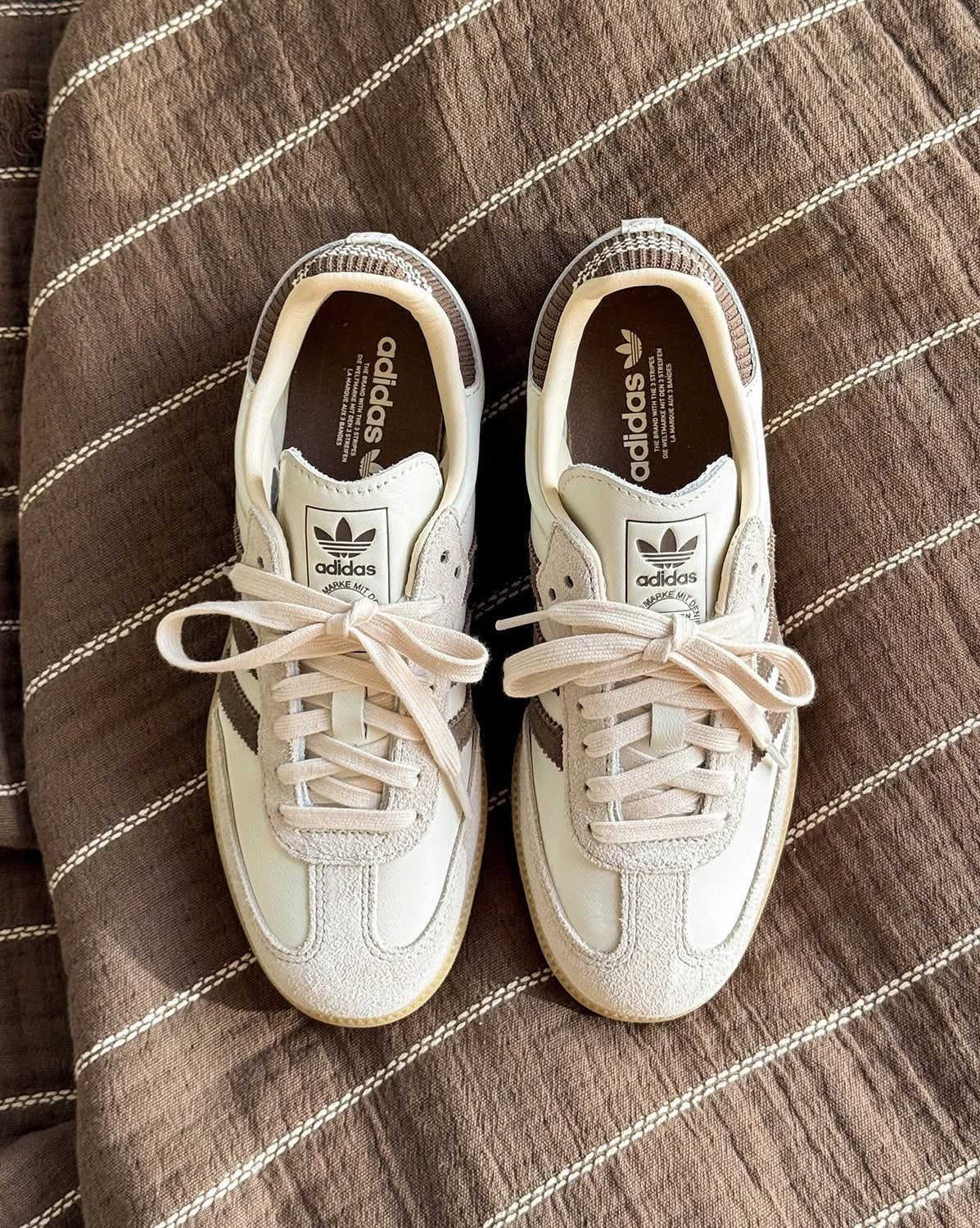


Adidas Samba OG White Halo Blue
₹24,142.00
Independent reseller. Drop Shop Club is not affiliated with, endorsed by, or sponsored by the brands shown on this site.
Delivery and services
Origin: The Adidas Samba, a cornerstone of athletic and lifestyle footwear, originated in 1949. Conceived by Adidas founder Adolf Dassler, the shoe was initially designed to provide superior grip on icy terrains, a critical innovation for the football pitches of the era. Its inception marked a pivotal moment in sports technology and design, setting the stage for its enduring legacy. The Samba's creation was a direct response to the practical demands of early post-war football.
Construction: The 'White Halo Blue' Samba OG boasts a meticulously crafted design. The upper is predominantly fashioned from a premium white leather base, enhanced by a distinctive T-toe design and strategically placed suede toe overlays, offering both aesthetic appeal and enhanced durability. Signature elements such as the iconic 3-Stripes with serrated borders, the "Samba" branding, and a durable gum rubber outsole, contribute to its instantly recognizable profile. The shoe incorporates a molded footbed, providing classic cushioning for all-day comfort, and true-to-size fit.
Utility: Initially engineered as a soccer training shoe, the Samba's utility swiftly evolved. It was adapted for indoor football, providing the necessary support and grip for the fast-paced nature of the game. Its versatile design and robust construction allowed it to transition seamlessly from the pitch to the streets. Today, the Samba stands as a popular lifestyle choice, embraced for its casual comfort, timeless style, and enduring appeal.
Influence: The Adidas Samba has profoundly impacted multiple subcultures, solidifying its status as a true icon. The 'Casuals' of the UK, during the 1970s and 1980s, adopted the Samba as a symbol of their subcultural identity. The shoe's sleek design and practicality made it a favorite among hip-hop enthusiasts during the 1980s. The Samba's influence extends to the skateboarding community and indie fashion, where it continues to be a staple. The Samba's enduring popularity speaks to its versatility and ability to resonate across generations and diverse cultural landscapes.
Delivery & Returns
Unused returns within 3 days. Authenticity, damaged-item, or incorrect-item claims within 7 days of delivery.