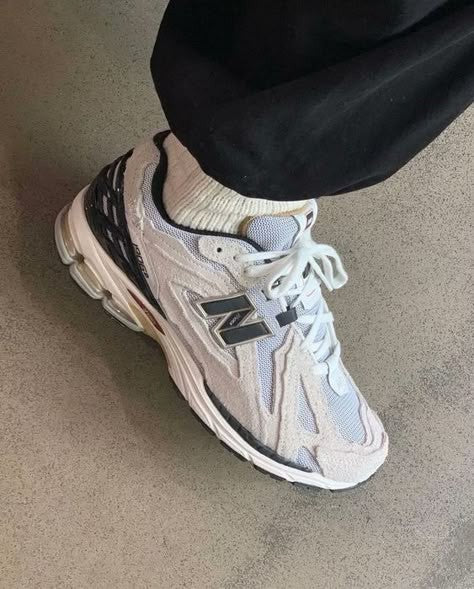


New Balance 550 Salt March Limelight (Women's)
₹11,729.00
Independent reseller. Drop Shop Club is not affiliated with, endorsed by, or sponsored by the brands shown on this site.
Delivery and services
Origin: The New Balance 550, initially conceived in 1989 as a basketball shoe under the name P550 Oxford by designer Steven Smith, represents a pivotal moment in athletic footwear history. Its initial release, however, failed to capture significant attention, relegating it to the archives. This early chapter underscores the unpredictable nature of market reception and the often-unforeseen trajectory of iconic designs. The 550's eventual resurgence, decades later, would redefine its legacy.
Construction: This iteration of the New Balance 550 features a low-top silhouette meticulously crafted from premium white leather, accented by vibrant green hues adorning the iconic 'N' logo, 550 branding, and the collar, which uses ripstop nylon. Contrasting volt details are strategically placed on the tongue tag, collar overlay, and piping, enhancing the shoe's visual appeal. The materials, including smooth and perforated leather, ripstop nylon, mesh, and a durable rubber outsole, ensure both style and enduring performance.
Utility: Primarily designed for casual wear, the New Balance 550 Salt Marsh Limelight (Women's) seamlessly blends its athletic heritage with modern lifestyle trends. While originally engineered for basketball, its design has evolved to cater to everyday use. The inclusion of an EVA foam midsole provides essential cushioning, ensuring comfort during extended wear. The rubber outsole, featuring an updated traction pattern, ensures reliable grip, making it a versatile choice for various urban environments.
Influence: The New Balance 550 has become a cornerstone of contemporary street style. The 550's revival was significantly propelled by Teddy Santis, founder of Aimé Leon Dore (ALD), whose collaboration in 2020 injected new life into the silhouette, solidifying its status. The shoe's influence extends far beyond its initial purpose, finding a strong presence within fashion-forward circles and among sneaker enthusiasts. Its connection to the 90s fashion revival and street style movements further cements its place as a cultural icon.
Delivery & Returns
Unused returns within 3 days. Authenticity, damaged-item, or incorrect-item claims within 7 days of delivery.